Class of 2k9 Accepting Applications...
An executive member of online marketing collective the Class of 2k9 posted to the CW list on Friday saying that the Class is accepting applications for membership. If you have a mid-grade or YA novel under contract for 2009 publication and have an interest in joining the Class of 2k9, you can e-mail them at theclassof2k9@
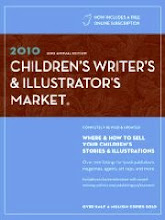
If you're not familiar with the Class of 2k7 and Class of 2k8, visit their websites. Also see Greg Fishbone's 2008 CWIM article: "Class of 2k7: First-Time Authors Band Together for Book Promotion" (pgae 98).

Showing posts with label Class of 2k7. Show all posts
Showing posts with label Class of 2k7. Show all posts
Monday, February 11, 2008

Friday, October 12, 2007
 National Book Award Nominees...
Finalists for the National Book Award for have recently been announced. Authors nominated in the Young People's Literature include 2008 CWIM contributor Kathleen Duey, for Skin Hunger: A Resurrection of Magic, Book One (Atheneum) as well as Sherman Alexie for The Absolutely True Diary of a Part-Time Indian (Little, Brown); M. Sindy Felin for Touching Snow (Atheneum); Brian Selznick for The Invention of Hugo Cabret (Scholastic); and debut author and Class of 2k7 member Sara Zarr for Story of a Girl (Little, Brown).
The full list is posted in GalleyCat. Winners will be announced in November 14.
Wednesday, October 03, 2007
Debut Author of the Month: Eric Luper... Just as those unfortunate folks who can't keep away from casinos, if you read the first chapter of Eric Luper's debut Big Slick you'll be hooked. Luper's young adult novel is set in a Texas Hold'em world of high stakes and big bucks, but, as the author explains below, it's more than just a book about playing poker.
Tell my readers a little about your first novel, Big Slick, which was just released by Farrar, Strauss & Giroux.
Big Slick is a novel about a young poker prodigy named Andrew Lang who gets himself into some hot water after he decides to "borrow" a few hundred dollars from the cash register at his family's dry-cleaning business to play in a big tournament. Andrew makes mistake after mistake and things quickly spiral out of control. Throw into the mix a hot co-worker crush, a borderline geeky best friend, and a very strange family dynamic and we have the recipe for some major-league hi-jinks.
But although people like to pigeonhole Big Slick as a "poker book," it's really a novel about love, friendship and trust.
And tell us about some of the research you did as you wrote. Did it ever get...expensive?
Surprisingly not. I started writing Big Slick soon after I learned about the game. After reading about a dozen books on Texas Hold'em, I was probably better prepared than most when I first sat at a table. And I had a killer good-luck streak. I played in Atlantic City, Las Vegas and at a local Indian casino and every time I left with more money than I started with.
Lately, I have been playing far less often and my skills have waned. I'm not nearly as sharp as I was. In fact, I'm a sitting duck (at least that's what I want you to think!).
What's a bigger gamble: going all-in, or submitting an unsolicited manuscript?
Submitting an unsolicited manuscript is not a gamble at all. A writer must continually hone his craft, write and revise relentlessly, and do the research to find the best publishing house and editor for his novel. If some part of that is luck, please show me the angle!
You didn't have an agent for your first book Big Slick. How did you wind up at FSG?
I met Wes Adams at the mid-winter SCBWI conference in New York City. I found out he was Jack Gantos's editor and I had to go see what the guy had to say. Wes had forgotten his glasses that day and winged his presentation. I'm not sure if this was shtick or if he actually showed up with notes that he was unable to read, but it won me over. He had me at hello.
Tell us a little about your path to publication.
I have an English degree from Rutgers College, but I decided rather than choosing the path of the starving artist I would choose the path of the not-starving artist. So, I went to professional school after undergraduate. After a few years, I decided to get back into writing and I began to tinker around with this and that. I worked on a middle grade fantasy, a picture book, a chapter book and another young adult title. Each piece I worked on got progressively better, and although I had a few nibbles, I couldn't seem to get any traction. Then Big Slick happened in 5 months or so and it was accepted on one of its first submissions with very few revisions necessary. It seems I had turned a corner.
Why did you decide to pursue an agent after your first publication was underway? How did you find your agent Linda Pratt?
Having my professional practice and a family and a house and pursuing a writing career is too much for any one person to handle. I opted to get an agent because I wanted the additional time to write.
I have known Linda Pratt since 2001 when I got a 10-minute critique with her at a conference in Lake Placid, NY. After her critique, she offered to take a look at my submission once I revised it. In retrospect, the book was terrible, but Linda read all 200+ pages of it and sent me a 5-page single-spaced critique letter that did not spare the rod. Short of getting my first book contract, it was the most cathartic moment in my writing career. I submitted things to her periodically after that, but somewhere deep down I knew I wasn't ready.
Then, after Big Slick was in the can and I was going full-steam on my next novel, I saw Linda at the Rutgers One-on-One conference. It may sound crazy, but I walked right up to her and told her that I was ready for her. She lit up and suggested I send her what I was working on. I sent her Bug Boy in February of this year and the Sheldon Fogelman Agency offered me representation within weeks. The call came as I was trying my best to navigate Disney with my family. I was so excited that it was a struggle not to drive my rental car into a giant topiary of Goofy.
You're an active member of SCBWI, part of the Class of 2k7 and a member of several critique groups--how has this network been helpful to you as you sought publication?
This question alone could be a topic for a book-or at least a thesis of some sort. For me, writing is a very private endeavor. However, I think writers, like any artists, need an outlet to share the experience with other like-minded people. I consider myself fortunate to have grown alongside dozens of other writers-seeing each of them develop, blossom, stumble, and succeed right as I'm doing the same has been awesome. The Class of 2k7 has been particularly interesting because we are all following a very similar trajectory right now-the release of our first books. It's been so helpful to hear about editing woes, cover design gripes, review indigestion and book release jitters from so many other talented authors right when I'm experiencing the exact same thing. Even though we are all very different, we're all in this together!
How did a reluctant reader like yourself end up an English/Creative Writing major at Rutgers?
I am going to have to chalk that up to uninspired high-school English teachers. I remember Mr. Byrne teaching us about iambic pentameter with his head buried in a book. He read us Reuben Bright by Edwin Arlington Robinson with such a stress on the meter that he sounded like a depressed robot. I tuned out for the next three years.
Only when I got to college-when I took my freshman composition class-did I get the suspicion that I might actually like this stuff. We read The Unbearable Lightness of Being by Milan Kundera and our professor asked us to write an essay on it. Then the teacher scrambled up the essays, redistributed them, and charged us with writing a "review" on the other student's paper. Mine was called "The Unbearable Paper of Rebecca ______." I trashed this girl's essay like I was a scorned lover with a thorn in my paw and haven't looked back since.
And before I get all sorts of hate mail: No, our grades were not affected by the reviewer's opinion!
Do you think if there were more books like Big Slick (exciting, a little racy, with male main characters) when you were younger, you may have been more interested in reading?
I would like to think so. When I was in 7th grade, I thought I should be "into" books like Lord of the Rings and Dune, but they were far beyond my reading level. This shut me down. For a guy who didn't read much, I spent a lot of time in the library. I actually got into a fistfight in the library. Clearly, I lacked proper guidance.
What's your advice for reaching the notoriously reluctant teen male reader?
Write about what makes you nervous, happy, sad, or frightened-whatever moves you. Then trust that it will move someone else. For me, this is the hardest part about writing. You have to bare your innermost feelings. You have to put everything out there. If you are writing and you do not have a visceral reaction, then you are not digging deep enough.
Short chapters and a lot of action help too!
What's your best piece of advice for aspiring YA novelists? What's your best piece of advice for aspiring gamblers?
My advice for aspiring YA novelists and aspiring gamblers is the same: Get a real job. Very few novelists and very few gamblers are able to make a living at what they love to do!
Can you beat me at poker? (Does everyone ask you that?)
Like I said before, my skills have really slipped. I'm terrible these days. So, when do you want to play?
Thursday, July 26, 2007
08 CWIM Preview: Interview with Jo Knowles...
Over the next few weeks, I'll be posting previews of features and interviews that appear in the 2008 CWIM, which will be in stores in early August. (Just this minute Greg the Production Guy handed me two advance copies! A nice morning surprise.)
Today I offer an abbreviated version of my Q&A interview with debut novelist Jo Knowles. Jo's first book, Lessons From a Dead Girl, offers readers a powerful, often uncomfortable journey into the world of abuse and healing, chronicling the complex relationship between main character Laine and her best friend/tormentor Leah, who, Laine learns at the book’s opening, has died.
Jo's journey to publication was helped along by winning grants and awards including an SCBWI Work-in-Progress Grant for a Young Adult Novel in 2002, which attracted the attention of her agent Barry Goldblatt. And she won a PEN New England Children's Book Caucus Discovery Award in 2005, which lead to a contract with Candlewick. She's a member of the Class of 2k7 collective.
Would you recommend contests and grants to other writers pursuing publication?
Absolutely! There are so many good things that come out of applying for a grant. First of all, you have to write a synopsis, which is very hard but really forces you to think about your manuscript and what it’s about. I guess that sounds pretty obvious but when you do it for the first time, it’s like a revelation!
Second, I think submitting a sample of your work, say 10 pages, makes you look at those pages in a really intense way, through the eyes of the most critical reader you can imagine. Every sentence counts! Since doing this I now revise my manuscripts in roughly 10-page chunks, which usually translates to two chapters for me. I look at those chapters and work on how they stand on their own. It’s a great exercise.
Third, getting that call is the biggest thrill! At the time I got the call about the SCBWI grant I had been through some tough times in my personal life and was feeling pretty hopeless. I remember hanging up the phone and sitting on the floor and crying. It was wonderful! And then soon after that I received a letter from Barry Goldblatt (he’d read the notice about the grant in the SCBWI Bulletin) asking if I’d be interested in submitting my work to him. He’d only been in the business for about a year or so at that point, so I was really lucky! And then when I applied for the PEN award I’d sort of sunk to that hopeless place again. I’d had some close calls with revision requests, but I was beginning to feel like maybe I just didn’t have what it takes. A good friend of mine, Cynthia Lord (author of the Newbery Honor-winning Rules), encouraged me to give it a shot so I decided to take a chance on Lessons from a Dead Girl, a manuscript Barry hadn’t actually shopped around yet because I had nearly given up on it. I was totally shocked and thrilled when I got the call and found out I won.
Any tips on catching the eye of judges?
Hand in your best work. I know that sounds a bit simple, but really I think you have to make those first pages sing, just like the first pages of any book. How can your first sentence hook the reader? What would make the judge keep going? Read the pages out loud, have someone else read them to you, read all the first chapters from your favorite books and think about what it is that makes those resonate with you. Don’t just hand in any old thing for the sake of submitting. Respect the judges’ time and only submit if you have something you’ve put your all into. Also, follow the rules to a T. Don’t hand in more pages than requested. Follow the formatting guidelines. If the submissions say the excerpt should come from a completed work, don’t hand in something you’ve only written the first chapter of. Be professional.
You’ve admitted that you were a little nervous after sending me your manuscript to read. Are you apprehensive about your book arriving in stores?Well, I’m a natural worrier but of course this is the biggie! I know that the subject matter of Lessons from a Dead Girl is a tough one, so there could be strong reactions to it one way or the other. This is a story that I felt had to be told though, and told with honesty, however painful or uncomfortable it might be. I look back to Robert Cormier and how brave he was to cut right to the truth in The Chocolate War and really in all of his books. He’s not afraid to write about ugly things. Ugly things exist. I think that’s the beauty of his work: he knows how to draw that curtain open and do it in a way that isn’t sensational, but real.
As a first-time author, were there any surprises during the publishing process? What has your relationship with your editor been like? With your agent?
It’s funny but I don’t think there have been too many surprises. The biggest surprise was getting an offer! My editor, Joan Powers, is wonderful. She is very straightforward, asks lots of questions, and trusts me to answer them in my revisions. I certainly don’t think she ever shied away from asking tough questions, and I really appreciate that. My agent, Barry Goldblatt, is terrific. He’s become a good friend who knows and cares about my career and me. Barry has a reputation for being “brutally honest” but I think I should set the record straight right now and say he also has a huge heart. You have to be honest in this business. That may sound harsh but dishonesty will only lead to disappointment later. Barry knows that, and I think by being honest up front he is giving aspiring writers a huge gift. Writing is hard, hard work. But if you keep at it, if you keep revising, keep listening to the feedback rather than feeling it, you will get better, and you will succeed.
Subscribe to:
Posts (Atom)


 Posts
Posts


